10 Tokyo City Tour Mistakes to Avoid (Local Tips)
This isn't a list of generic Japan etiquette advice. Every mistake below is specific to choosing and booking one of the ten guided Tokyo tours compared on this site: the wrong tour for the wrong day, a document left at home, cash nobody warned you to carry. None of it is exotic, and all of it is avoidable once you know where the traps actually sit.
Quick answer
I see the same ten mistakes every week, and only half of them happen at the booking screen. The costliest is still booking the nine-to-ten-hour full-day coach for a jet-lagged arrival day when a four-hour, thirty-nine-dollar half-day covers three of the same landmarks. The other half happen on the ground, in the gaps between tour stops where Tokyo's own habits apply: quiet trains, food finished at the stall, streets without bins, departures that leave on the minute. Every guided sightseeing option in Tokyo sits compared on this site's homepage, which is the fastest way to catch the booking half before it happens.
Key takeaways
- Costliest booking mistake: the full-day coach on your jet-lagged arrival day
- Costliest on-the-ground mistake: arriving at the meeting point on the dot; departures leave on the minute
- The go-kart needs a physical 1949-Geneva IDP; a phone photo fails
- Trains run silent: no calls, low voices, drinks kept in the bag
- Eat street food standing at the stall; carry a bag for your own rubbish
- Golden Week (29 April to 5 May) and Obon are the two weeks to dodge
Every Mistake, What It Costs You, and the Fix
One row per mistake, in the order they're explained below. The Fix column is the one-line version; the full detail and the internal link for each sits in its own section further down.
| Mistake | What It Costs You | The Fix |
|---|---|---|
| Booking the full-day coach for arrival day | 9-10 hours on your worst day, for the higher price | Book the 4-hour Hato Bus first, the coach later |
| No physical IDP for the go-kart | Turned away at the garage, the activity lost | Get a 1949 Geneva IDP before you leave home |
| Expecting to enter the Imperial Palace | A disappointed hour at the outer garden | Treat it as a bridge-and-moat stop, not a tour |
| Booking into Golden Week or Obon | Packed trains, sold-out stops, peak prices | Shift dates a week either side if you can |
| No cash for the small extras | A helmet or insurance fee you cannot pay | Carry a few thousand yen in small notes |
| Arriving at the meeting point on the dot | The seat travels without you | Stand there ten minutes early, exit pre-checked |
| Taking a phone call on the train | Every eye in the carriage | Silent mode at the gates, calls on the platform |
| Tipping your guide | An awkward refusal dance | Say thank you; there is no tipping culture |
| Eating your snack while walking | Sloppy manners on a temple approach | Stand at the stall, finish, then move |
| Assuming there will be a bin | An afternoon carrying an empty can | One plastic bag in the daypack |
Mistake #1: Booking the Full-Day Coach for Your Jet-Lagged Arrival Day
The full-day coach runs nine to ten hours, from a 7:20 or 7:50 pickup to a drop-off around 18:10, and it's the most expensive guided day on this site's list at $121.88. Booking it for the day you land, running on no sleep, means paying the most for the longest day at the moment you're least able to enjoy it.
The half-day Hato Bus solves this directly: four hours, $39, and it already covers three of the coach's own stops, the Imperial Palace outer garden, Tokyo Tower's Main Deck, and Senso-ji. Compare both buses stop by stop before deciding which day gets which tour.
Mistake #2: Showing Up for the Go-Kart Without a Physical IDP
These are road-legal karts on public streets, so Japanese driving law applies in full. Every driver needs a physical passport and a physical International Driving Permit in 1949 Geneva Convention format; a photo on a phone doesn't count, and the permit can't be issued once you're already in Japan. Licences from Switzerland, Germany, France, Taiwan, Belgium and Monaco use a Japan Automobile Federation translation instead, and licences from China, Indonesia, Mexico, Qatar and Saudi Arabia aren't accepted at all. The full licence rules, one clause away from turning you back at the garage door, are worth reading before you book.
Mistake #3: Expecting to Walk Inside the Imperial Palace
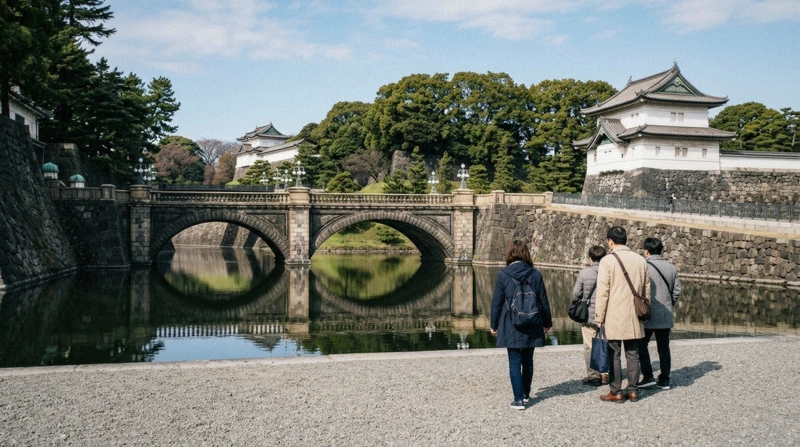
Every tour and every private guide on this site handles the Imperial Palace stop the same way, because the Emperor's household still lives on the inner grounds: what you get is the walk to Nijubashi Bridge or a stop at the East Garden, never the palace interior. Operators state this on their own listings now, but it still catches people who pictured something more.
Treat it as a moat-and-bridge photo stop, not a building tour, and the disappointment disappears. Why every tour on this site stops at the same gate is explained in full here.
Mistake #4: Booking Into Golden Week or Obon
Golden Week runs 29 April to 5 May, and Obon lands in mid-August; both are Japan's biggest domestic travel weeks, and both push trains, popular stops and hotel prices to their yearly peak. Tours still run through both, but a fixed-departure coach or bus gets noticeably fuller and pricier, and a private car's flexibility is worth more than usual.
Shift your dates a week either side if your schedule allows it. The full month-by-month calendar, including the two weeks worth avoiding, is broken down here.
Mistake #5: Not Carrying Cash for the Small Extras
Most of these ten tours quote a clean headline price, and most of them leave a handful of gear and insurance fees for the day itself, paid in cash. None of it is hidden exactly, it's just not in the number you booked at.
| Extra | Tour | Cost |
|---|---|---|
| Insurance surcharge | Street go-kart | ¥1,000 (about $7) per driver |
| Helmet rental | Bike and e-bike tour | ¥1,000 (about $7) |
| Child seat (2 days' notice) | Bike and e-bike tour | ¥3,000 (about $20) |
Carry roughly ¥3,000 to 5,000 in small bills on any day that includes the bike or go-kart tour, since neither fee is collectible by card at the point of use. Last verified: July 2026. The full price breakdown across all ten tours, extras included, is here.
The same small notes cover the Nakamise stalls and vending machines between stops. Card acceptance in Tokyo stops at exactly the places a tour makes you hungry.
Mistake #6: Treating the Departure Time as a Suggestion
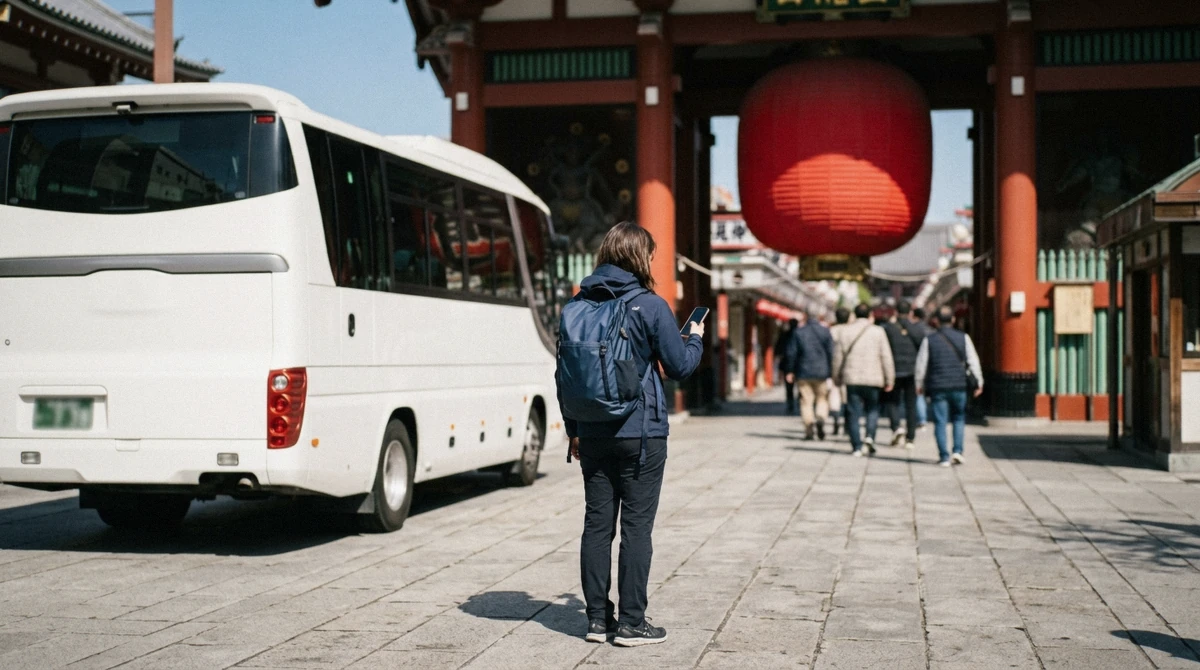
A Tokyo departure time is when the coach moves, not when boarding opens. Hato Bus loads from a numbered bay near Shinjuku, the walking guides count heads at a station exit, and a fixed-departure group waits two or three minutes for a missing name, not ten. Miss it and the seat travels without you.
The stations are the real trap. Shinjuku has more exits than you will have patience for, and walking from the wrong one eats the buffer you thought you had. Plan to stand at the meeting point ten minutes early, with the exit name from the booking confirmation already matched to a station map. The pickup logistics for each bus are laid out in the Tokyo bus tour guide.
Mistake #7: Taking a Phone Call on the Train
Between tour stops you ride the same trains as everyone commuting around you, and the carriage runs quiet. Phone calls are out. Conversations stay low. A Time Out survey of Japanese rail passengers put talking loudly on the train at the top of the annoyance list, and one first-time visitor described getting stern looks for drinking water mid-carriage.
On a guided walk the guide will flag the local habits before you board. Nobody warns you on a DIY transfer between two bookings. Set the phone to silent when the gates close and save the call for the platform; the carriage will thank you with its usual silence.
Mistake #8: Tipping Your Guide
Tipping isn't part of Japanese service culture, on a Tokyo tour or anywhere else, and offering one can genuinely confuse or embarrass a guide rather than please them. The fee you already paid, guide included, is the full cost of the tour.
This one costs nothing to get wrong financially, but it's worth knowing before the moment comes up at the end of a walk or a drive. The full price picture, including what each fee already covers, is here.
Mistake #9: Eating Your Nakamise Snack on the Move
The stalls on the Nakamise approach to Senso-ji sell food that begs to be carried off: fresh senbei, melonpan, ningyo-yaki straight off the iron. Carrying it off is the mistake. Eating while walking reads as sloppy manners in Japan, and etiquette guides for visitors say so directly: stand where you bought it, finish it, then move.
The habit costs you nothing. The stalls expect it, the walking guides build stall stops into the pace, and standing still for three minutes beats brushing sauce off your jacket in a temple forecourt. Buy, stand, eat, walk.
Mistake #10: Assuming There Will Be a Bin
Tokyo's streets carry almost no public rubbish bins, and the ones that exist cluster inside stations and next to vending machines, meant for what you bought on the spot. First-timers discover this holding an empty coffee can with ninety minutes left on a walking tour.
The fix weighs nothing: one small plastic bag in the daypack, wrappers and cans pocketed until your hotel. Convenience stores usually take back packaging from what they sold you, and that is the extent of the public infrastructure you can count on. On coach days the problem shrinks, since your seat is a base; on the two-hour walks it is your pocket or nothing.
Before You Book: The Checklist
The short version of everything above, in the order it matters before you click confirm. Two price traps worth a second look before you confirm are both group-size math; private vs group Tokyo tours works them through person by person.
- Match the tour length to your energy that day, not just your itinerary
- Confirm whether your tour includes hotel pickup; only 2 of 10 do
- Check your dates against Golden Week (29 April-5 May) and Obon (mid-August)
- Arrange a physical International Driving Permit before you leave home if you're booking the go-kart
- Carry ¥3,000 to 5,000 in cash if your day includes the bike or go-kart tour
- Do the per-head math on the private car if you're a group of three or more
- Check the forecast if a walking tour falls in September or October
- Note the exact station exit for your meeting point and add ten minutes
- Pack one plastic bag for rubbish; Tokyo streets have almost no bins
- Check September and October rainfall before booking a walking date
Tokyo Tour Dos and Don'ts
If I could tell every first-time booker one thing, it would be to read the meeting-point and pickup line on the listing before checkout, not after. That single detail, more than anything else on this page, explains most of these ten mistakes.
Do
- Book the half-day Hato Bus for your first, jet-lagged morning
- Carry small cash for gear and insurance extras on the bike and go-kart tours
- Get your International Driving Permit before you leave home for the go-kart
- Check the private car's per-head price against your actual group size
- Confirm the exact meeting point the night before, especially for the Shibuya walk
- Finish street food standing at the stall you bought it from
Don't
- Don't expect to walk inside the Imperial Palace on any tour
- Don't book a walking-only day into September or October without a rain plan
- Don't assume hotel pickup unless you've booked the private car or the customized tour
- Don't tip your guide; it isn't the local norm
- Don't skip a tour altogether assuming Tokyo is easy enough to wing on a tight first visit
- Take phone calls on the train between stops
- Photograph shrine visitors up close without asking
None of these ten mistakes are exotic. Half are booking-page details: a length that does not match your energy, a document left at home, a fee not shown until the day. The other half are Tokyo's own rules, and they cost nothing once you know them.
The one meta-mistake left is assuming you need no tour at all because the trains are good; for a first, time-tight visit, a guided day removes more friction than it adds, and the whole Tokyo tour shelf, side by side makes the choice a five-minute job.
Frequently Asked Questions
Which Tokyo tour dates fill up first?
Dates inside Golden Week (29 April to 5 May) and Obon (mid-August) are the two windows worth booking earliest, since both are Japan's biggest domestic travel weeks and popular tours fill alongside hotels and trains.
What happens if my Tokyo tour is cancelled for weather?
It depends on the tour. The full-day coach documents one concrete example on its own listing: its Tokyo Bay ferry stop is swapped for Hamarikyu Gardens or the Fukagawa Edo museum on days it's suspended for weather, no refund attached. Building a spare half-day into a September or October trip is a reasonable hedge.
What's the single costliest mistake people make booking a Tokyo tour?
Booking the nine-to-ten-hour full-day coach for a jet-lagged arrival day. It's the longest, most expensive tour on the list, and a four-hour, $39 half-day covers three of its own stops for less money on a day you're better placed to enjoy it.
Is the $300 private tour price per traveller or per group?
Per group, flat, for up to five people. Two travellers usually do better on the coach; from three people up, the private car's flat rate starts winning on price per head, and the gap widens with every extra traveller.
Can I use a photo of my licence or passport for the go-kart tour instead of the originals?
No. Both documents have to be physical: a passport and an International Driving Permit in 1949 Geneva Convention format. A photo on a phone or a digital licence app doesn't satisfy either requirement, and the permit can't be issued once you've arrived in Japan.
Which Tokyo tour extras need cash, not card?
The go-kart's ¥1,000 insurance surcharge and the bike tour's ¥1,000 helmet rental and ¥3,000 child seat are all collected in cash on the day. Neither tour's advertised price includes them.
What if I only have one day and made the wrong tour choice?
Most of the ten allow free cancellation up to 24 hours before the start time, so check the listing and rebook the better fit rather than sitting through a tour that doesn't match your day. A shorter walking or bike tour can usually slot in on short notice where a fixed-departure coach can't.